When Helping Gets in the Way of Connection
I have a confession to make.
Sometimes, when I’m coaching a woman, I get so excited about what I’m seeing that I can’t seem to stop talking.
I’ll recognize a pattern in something she’s describing, I’ll see a connection between what she’s experiencing now and a belief she’s carried for years, and suddenly, something clicks for me, and I want to share it. Immediately.
I can actually feel the urgency in my body. I lean toward my computer screen. I start thinking about what I’m going to say before she’s finished speaking. Sometimes I even interrupt her. I’ve watched recordings of my coaching sessions where I’m leaning so far forward that you can practically see the top of my head.
There are moments when I have to deliberately sit back in my chair. Sometimes I’ll even put my hand near my mouth as a physical reminder to stop talking. And sometimes, despite all of that, I just keep going.
Eventually, I’ll hear myself and realize I’ve been talking for what feels like forever. I’’ll stop and say something like, “Wow. I just spent ten minutes talking at you. I’m going to pause. How is all of this landing for you?”
I’ve been doing this work for two decades, and I’ve always been a fairly directive therapist and coach. My clients have often appreciated that about me. They come to me because they’re struggling with something, and they want answers. They want to understand what’s happening. They want a plan for how to make things better.
For a long time, I was very good at giving them those things. And I loved being good at it. There’s something deeply satisfying about recognizing a pattern, explaining it to someone, and watching her face light up with understanding. I love that moment when someone says, “Oh my gosh. That’s exactly what’s happening.” I still love it.
But lately, I’ve been questioning something about the way I work. What if my eagerness to help someone understand is sometimes getting in the way of her understanding herself? It’s an uncomfortable question, especially for someone who’s built a career around helping people.
Recently, I was reviewing the transcript of a coaching session and noticed how much explaining I had done. I was offering thoughtful observations. I was making connections. I was teaching ideas that I genuinely believe can change how women experience their lives. But I was also doing a lot of the talking, and I started wondering what might have happened if I’d asked another question instead.
What might she have discovered if I’d given her more time? What might I have learned about her that I didn’t already know? And why was it so difficult for me to wait?
I began asking myself the same questions I ask the women I work with. What am I feeling in my body when I have the urge to explain? What am I afraid will happen if I don’t? What am I believing about my responsibility in that moment? The answers were revealing.
First, I genuinely love knowledge. I love making connections and discovering something new. If I’m listening to an incredible podcast, I’ll often send it to someone before I’ve even finished the episode. I get so excited about what I’m learning that I want someone else to experience it with me. The same thing happens with books, conversations, and ideas. When something clicks for me, sharing it feels almost irresistible.
But there was more to it.
I realized that somewhere along the way, I’d taken on a gigantic amount of responsibility for my clients’ progress. If a woman doesn’t make enough progress during the twelve weeks we work together, I worry that I haven’t done my job well. If she doesn’t understand something I’m teaching, I feel responsible for making sure she gets it. And when I can see something that she hasn’t yet recognized, I feel an urgency to help her get there.
I had to acknowledge something uncomfortable. I was taking responsibility for more than my share of the relationship.
Of course I’m responsible for the quality of the experience I provide. I’m responsible for showing up prepared, bringing my expertise, asking thoughtful questions, offering guidance, and paying attention to what’s happening between us. But I cannot be responsible for another person’s learning—or showing up own her life— in the same way she’s responsible for it.
I can’t decide when an insight will arrive for her. I can’t make her ready to question a belief she’s relied on for decades. I can’t control the choices she makes in her life. And I can’t build her trust in herself by continually giving her my answers.
In fact, doing so may reinforce the very pattern we’re working to change.
Many of the women I work with are extraordinarily capable. They’ve spent their lives learning how to solve problems, gather information, make decisions, and achieve the outcomes they want. Those abilities have served them really well.
But motherhood introduces experiences that don’t always respond to more information or a better plan. A kid is struggling, and there’s no obvious solution. Something feels wrong, but they can’t figure out what to do. They’re uncertain, uncomfortable, or afraid of making a mistake, and their instinct is to find the answer. Now. And then they come to me, someone who has spent her career studying maternal mental health, and ask me to tell them what to do.
It’s an invitation I know how to accept.
But I’m beginning to recognize that sometimes the most helpful thing I can offer isn’t another answer. It’s the space for a woman to discover that she can remain present, think for herself, and make a choice even when she doesn’t know exactly what to do.
And that means I have to practice tolerating some uncertainty myself. I have to be willing to sit in the silence. I have to ask a question without knowing where the answer will lead.I need to allow that woman to take longer than I might take to recognize something. I have to trust that she may discover something I haven’t considered.
The more I think about this, the more I recognize how closely it parallels my own experience as a mother.
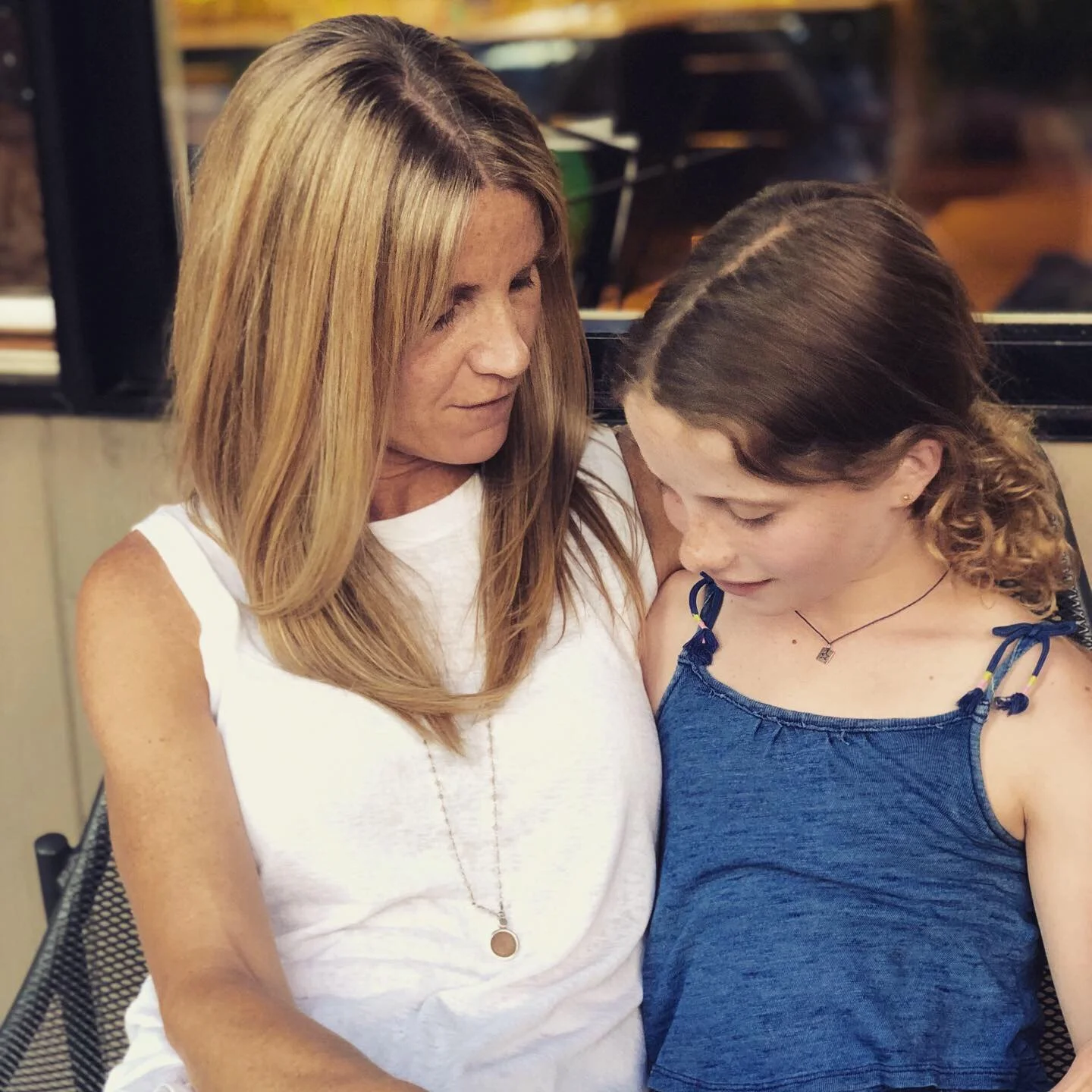
I have two daughters, and they couldn’t be more different in how they respond to my input. My oldest, who is nearly twenty, genuinely values my perspective. She asks for my advice. and wants to know what I think. And I love that. But I’m also aware of how easy it would be to confuse her appreciation for my guidance with an invitation to make decisions for her.
She’s an adult now. What she needs from me isn’t always an answer. Often, she needs someone she trusts to help her hear her own thinking. Someone she can try an idea out with. Someone who can listen without immediately telling her what she should do.
My younger, 17-yer-old daughter is different. She doesn’t particularly want my input. At least, that’s what she tells me. And I’ve noticed something fascinating about myself. The less she wants my advice, the more I can feel the urge to give it. I can recognize something happening in her life and want desperately to help her see what I see.
I want to ask questions. I want to point out inconsistencies. I want to offer a perspective that I believe could help. But I’ve learned that when I do too much of that, she often moves away from me. And when I stop? When I let her talk without trying to direct the conversation? When I resist the urge to ask another question or make another observation?
She moves closer.
With my younger daughter, connection often happens in the silences more than it does in the talking.
I can actually see her lean toward me when I stay quiet. That has been an important lesson, because sometimes, when she pushes back against my input, it feels like disconnection.
There’s a part of me that wants to change that feeling by talking more, explaining myself, or trying harder to reach her. But I’ve learned that I can stay connected to her even when she doesn’t want my advice. Even when we disagree., when I don’t know what she’s thinking, and when I have something I believe would be incredibly helpful to say. I don’t have to fill every silence to stay close to her.
This is the same practice I’m asking the women in my Calm Connection Experience to develop.
We spend so much of our lives learning how to become more capable. We learn how to recognize problems, anticipate challenges, gather information, and take action. And of course those are valuable abilities.
But there’s another kind of intelligence we need in our relationships. I call it relational intelligence.
It’s our capacity to stay engaged with what’s actually happening, especially when things feel uncertain, uncomfortable, or different from what we expected, so we can choose how to respond rather than automatically reaching for the strategy we know best.
For me, that automatic strategy is often explaining. For a mother whose child is struggling, it might be fixing. For someone who fears disappointing others, it might be saying yes. The behavior looks different, but the opportunity is similar.
Can we recognize what we’re feeling without immediately acting on it? Can we become curious about the person in front of us rather than assuming we already know what she needs? Can we tolerate the discomfort of not controlling where the conversation goes?
I practice this in my coaching every day. I practice noticing the excitement that rises when I recognize a pattern. I practice paying attention to the urgency in my body and the impulse to jump in with an explanation.
Sometimes I still interrupt and sometimes I still talk too much. And when I do, I try to recognize it, acknowledge it, and repair. Other times, I catch myself sooner. I sit back in my chair. I ask another question. Or I let the silence continue a little longer than feels comfortable.
There’s something deeply satisfying about watching another person arrive at an understanding I haven’t given her. Sometimes she discovers exactly what I suspected and sometimes she discovers something entirely different. And sometimes I learn something I couldn’t have learned if I’d kept talking.
I don’t want to become less enthusiastic about what I know. I don’t want to stop sharing the experience and expertise I’ve spent decades developing. I want to become more discerning about when to use them. Because being able to help someone doesn’t always mean helping in the way that comes most naturally to me.
Sometimes the work is to offer an insight but it might be to ask a better question. Sometimes it’s to stay quiet long enough for another person to discover what she already knows.
This practice never has an end point. As a coach and as a mother. The more I pay attanetion and hold myself accountable, the more I continue to show up as the mentor, coach, and mom I want to be.