

Your Baby Needs You. That Doesn’t Mean They Need You Every Minute.
Going back to work does not automatically threaten your baby’s attachment. Babies need responsive, consistent, loving care, but secure attachment is much more complex than the number of hours a mother is physically present. Here’s what babies actually need, why separation and reunion are part of healthy relationships, and why mothers deserve better than fear-based rules about the first three years.

Is Daycare Bad for Babies? What the Research Actually Says
If you’ve ever dropped your baby at daycare and wondered whether returning to work could somehow harm them, you’re not alone. Here’s what decades of research actually tell us about childcare, attachment, cortisol, quality of care—and why maternal wellbeing belongs in the conversation too.

The Halo Effect: Are You Seeing the Child in Front of You?
The way we see our children shapes the way we respond to them. The halo effect helps explain why one behavior can mean something completely different depending on what we already believe about a child—and how easily those beliefs can become labels. Learning to notice the difference between what your child is doing and who you believe they are can create more curiosity, flexibility, and connection.

Your Baby Isn’t the Only Thing Shaping Your Experience of Motherhood
Motherhood gives us an endless supply of things to worry about. Sleep. Feeding. Attachment. Milestones. Behavior. But what happens when all that information teaches us to constantly scan for evidence that something is wrong? Sometimes the first step toward feeling calmer isn’t finding another solution. It’s learning to see what’s actually happening before deciding there’s a problem to solve.

Why Is It So Hard to Be Present With Your Kids?
You love your kids, so why is it so hard to actually be present with them? Our minds are often planning, anticipating, solving, and scanning for what comes next. Then a season ends and we wonder why we didn’t enjoy it more. Here’s why presence can feel harder than it sounds—and what can help.

Can Women Do It All? That’s the Wrong Question
For decades, women have been asking whether we can really “do it all.” But what if that question is part of the problem? The goal isn’t to become more efficient at managing an impossible number of tasks. It’s to build the capacity to know what each moment requires, so your ambition, your relationships, and your connection to yourself can all have room to thrive.

5 Signs Your Worry Is Getting in the Way of the Life You Want
Worry can look a lot like being a responsible, attentive mom. You plan, research, anticipate problems, and try to stay one step ahead. But when worry becomes your default way of moving through motherhood, it can quietly take you away from rest, connection, and the life you’re trying so hard to protect. Here are five signs worry may be costing you more than you realize.

Your Child’s Hardest Moments Are Actually Building Connection. Here’s why.
Tantrums, tears, hitting, separation, and disappointment don’t look like connection. But these messy moments can become some of the most important opportunities to build it. Here’s what staying connected actually looks like when your child is having a hard time—and when your instinct is to fix it.

Why Motherhood Makes Your Oldest Fears So Hard to Ignore
Motherhood has a way of bringing our oldest fears to the surface—especially for women who have spent a lifetime proving they are capable, worthy, and enough. Here’s why perfectionism, overthinking, and the need to get motherhood “right” may be connected to something much deeper.

You’re Already Rehearsing the Hard Parts of Motherhood. What If You Practiced Something Else?
Your brain is constantly predicting what will happen next—and if bedtime, daycare drop-off, or separation has been hard lately, it may be rehearsing the struggle before it even begins. Here’s how to use mental rehearsal differently: not to imagine a perfect outcome, but to practice staying present when motherhood gets uncomfortable.

What If You’re Using the Wrong Kind of Intelligence in motherhood?
You’ve spent years developing the ability to plan, predict, organize, and solve—and those skills have probably helped you build an extraordinary life. Then came motherhood. What if the problem isn’t that your strengths stopped working, but that some moments require a different kind of intelligence? Here’s why high-achieving mothers need both Strategic Intelligence and Relational Intelligence—and how learning to move between them can change the way you mother, relate, and live.

The Disease of Unfulfillment: When Loving Motherhood Isn’t the Same as Feeling Alive
You love your children more than anything. So why does part of you still feel restless, bored, or like you’ve disappeared? If you’ve wondered whether something is wrong with you because motherhood alone doesn’t feel like enough, this article is for you.

Are You the Kind of Mom Who Overthinks Everything… But Wishes You Could Just Be Present?
You aren’t trying so hard because you’re doing motherhood wrong. You’re relying on strengths that have served you everywhere else in life—during moments that require something different. Here’s why so many high-achieving moms get stuck in overthinking, and the pathway toward feeling more present, calm, and connected.

Why Knowing Better Isn’t Enough: The Hidden Reason Smart Moms Stay Stuck
You already know toddlers have meltdowns. You know you don’t want to yell. So why do the same patterns keep happening anyway? The answer isn’t that you need more parenting advice. It’s that lasting change requires more than insight—it requires helping your nervous system learn that a new way of responding is safe.

Maybe Motherhood Isn’t Asking You to Find Solid Ground—Maybe It’s Asking You to Become It
For many high-achieving mothers, postpartum anxiety isn’t just about worry—it’s about losing the certainty you’ve always relied on. In this personal story, Kate explores why motherhood feels so disorienting, how our nervous systems respond to uncertainty, and where real steadiness actually comes from.

Are You Chasing Admiration When What You Really Want Is Love?
Many high-achieving women spend years trying to earn love through achievement without realizing they’re actually chasing admiration. Here’s why that distinction matters—and how letting go of performance creates deeper connection in motherhood, partnership, and friendship.

Why Loving Your Child Can Literally Hurt (And Why That’s Not Anxiety)
Many mothers quietly assume that if loving their child feels overwhelming or painful, something must be wrong. But what if that ache isn’t evidence of anxiety or failure? What if it’s one of the deepest expressions of love? This article explores why vulnerability and uncertainty are inseparable from profound connection—and how learning to stay present with those feelings changes motherhood.
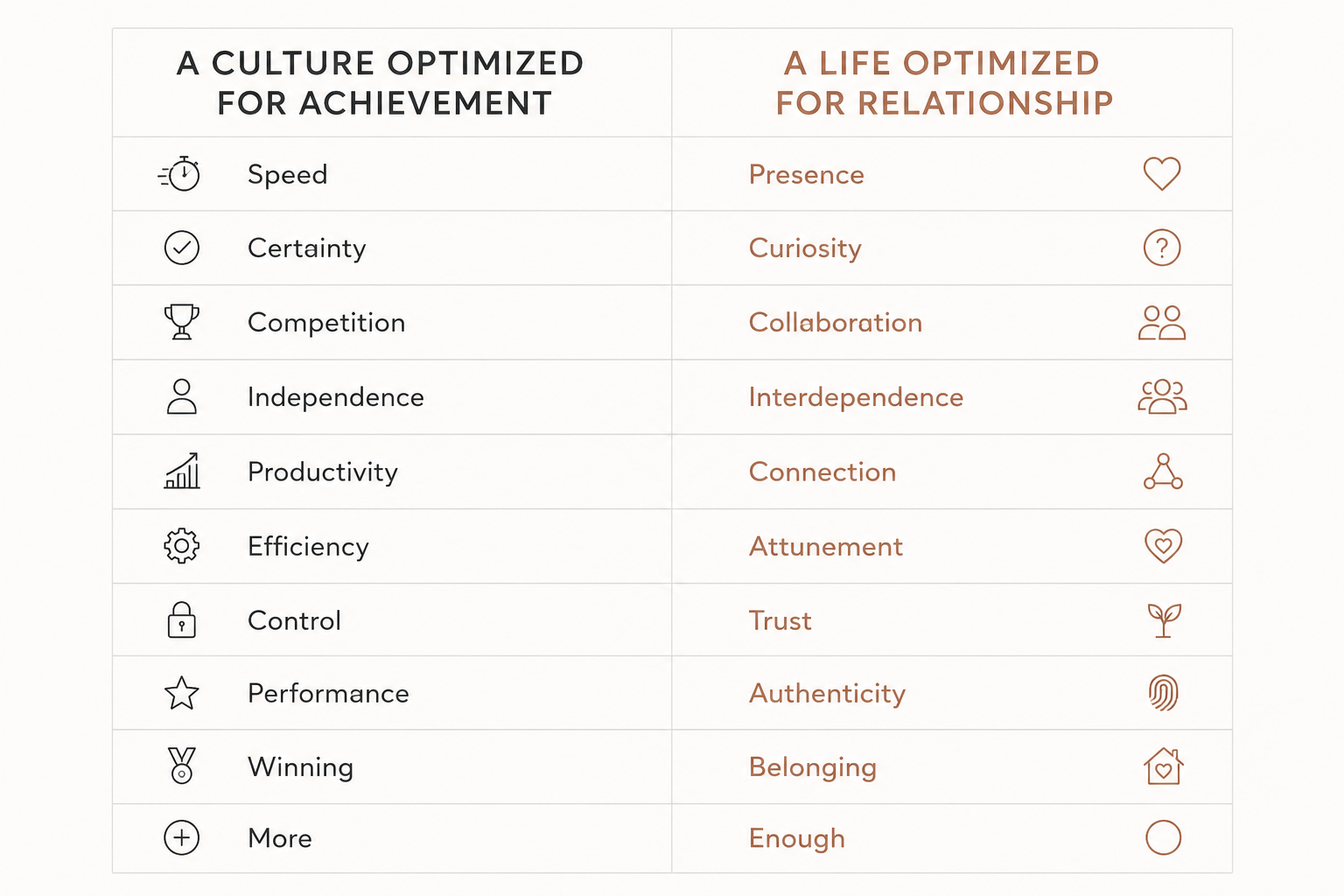
The Beliefs That Built Your Career Might Be Making Motherhood Harder
If you’ve been trying to be more patient, stop overthinking, or worry less without much success, the problem may not be your behavior. It may be the beliefs underneath it. Discover why the mindset that helped you succeed at work can make motherhood feel harder—and what creates more calm, connection, and confidence instead.

You Don’t Have to Earn Joy: The Lie High-Achieving Mothers Have Been Taught
If you always feel like you have to finish one more thing before you can relax, you’re not alone. Here’s why high-achieving mothers often postpone joy—and how learning to pause can strengthen your nervous system, your relationships, and your experience of motherhood.

The Hidden Belief Fueling Anxiety in Motherhood: “I’ll Be Okay When…”
If you’ve ever caught yourself thinking, “I’ll be okay when the baby sleeps… when the house is clean… when I stop feeling anxious…” you’re not alone. Many high-achieving mothers unknowingly tie their emotional well-being to external circumstances. This post explores why that happens, why it keeps anxiety looping, and how to begin building a steadier sense of okayness from within.